
Salesforce commission tracking
that runs real payroll every week
A payments company pays about a hundred sellers every Friday from Salesforce through Commish: residuals, upfronts, clawbacks and leases, each with a receipt. The connector reads what you already have; you do not reshape the org for it.
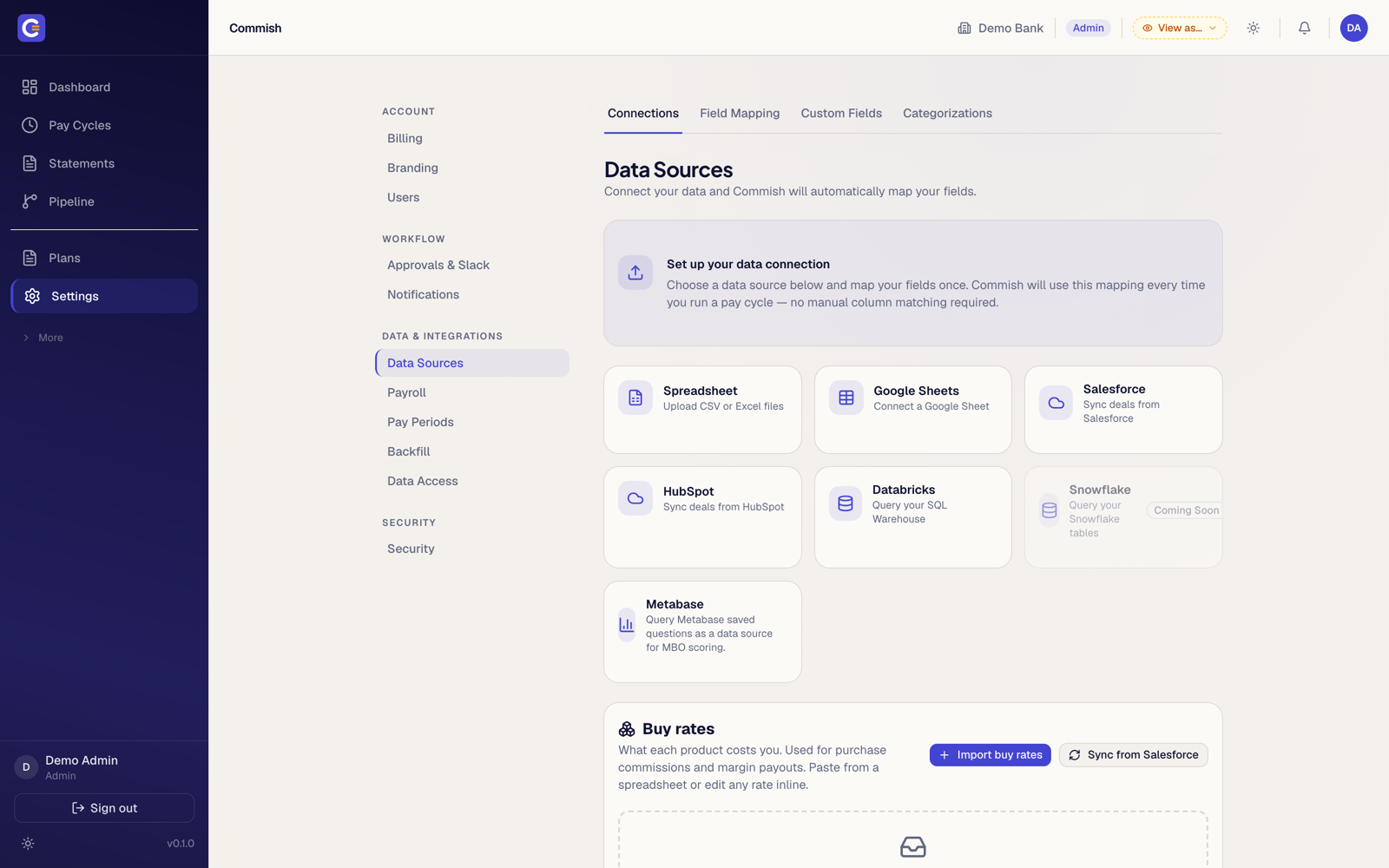
What Commish reads from Salesforce
Opportunities and opportunity line items, the owner, close and funded dates, stage, and any custom field: a merchant ID, a device, a lease term, a status that says whether the account is still live. Product cost can sync from Product2 for margin-based pay, so the plan can pay on the spread rather than the sticker. Mapped once, pulled every cycle.
Crediting, splits and the long memory
Credit follows the owner unless a field says otherwise: a referral partner, a sub-agent, a manager override. Residual plans pay every month on the account's processing volume; upfront plans pay on close or on funding. A clawback reaches back to the original payment and reverses it at the rate and split that applied then, which is the part spreadsheets drop.
Statements, approval, payroll
Each rep sees a statement with drill-down from their total to the opportunity. Finance reviews the cycle, approves it, and exports a payroll file in your provider's layout, ADP included, or a CSV. Commish writes nothing back to Salesforce. Rule changes are recorded with who changed what and when, and every past cycle keeps the rules it was paid under.

Point Commish at your org,
see the first run this afternoon
Read access to opportunities is enough to start. The receipt is the product.
Screenshots show a demo organisation with illustrative data.